☀️ Ask the Dermatologist

Sunburn, hydrogels & TermaBurn — answered by a dermatologist

We sat down with double board-certified dermatologic surgeon Dr. Andrew Breithaupt for a candid Q&A on what actually happens to sunburned skin, why a hydrogel is different from the classic bottle of aloe, and how TermaBurn fits in.

🩺 Featuring Andrew Breithaupt, MD · Double board-certified dermatologic surgeon

The Q&A

8 questions about sunburn & hydrogels

Tap any clip to play. Want to read instead? Open “Dr. B’s full answer” under each question.

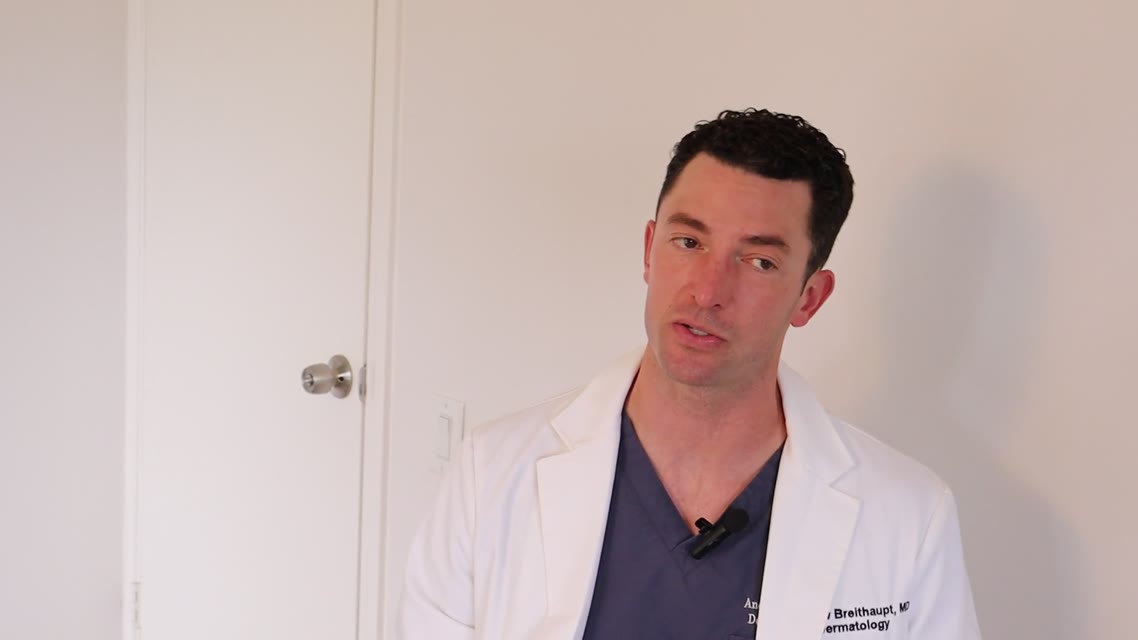
Dr. Breithaupt answering: What should you do the moment you realize you're burned? Watch · What should you do the moment you real…
Question 01

What should you do the moment you realize you're burned?

As a dermatologist and a Mohs surgeon, the first and best thing is: don't get sunburned in the first place — sun avoidance, seek shade, protective clothing, sunscreen, hats, all of that.

Read Dr. B’s full answer

As a dermatologist and a Mohs surgeon, the first and best thing is: don't get sunburned in the first place — sun avoidance, seek shade, protective clothing, sunscreen, hats, all of that. But I get it, life happens.

So, first thing: get out of the sun. If you have a sunburn, or you recognize sun injury, don't compound it — seek shade; if you can't, use protective clothing or sunscreen. The first thing you do is stop the injury.

Next, clean and cleanse the skin. A lot of sunburns happen at the beach, the park, the baseball field — so get the dirt, sand, and grime off your skin first. Your skin is a barrier that keeps good stuff in and bad stuff out, and when you burn it, that barrier function goes down. With a severe burn, you don't want an infection from contamination of the area. Plus, we're going to apply something to help it heal, so we want it clean first. So: a cool shower, clean the skin.

After that, cool and protect the skin — classically you'd think of a cold compress. Then you want to rehydrate the skin, which people classically think of as gels and creams. After cleaning and cooling, I think a product like a hydrogel is an excellent way to accomplish what we're after — rehydrating and protecting the skin.
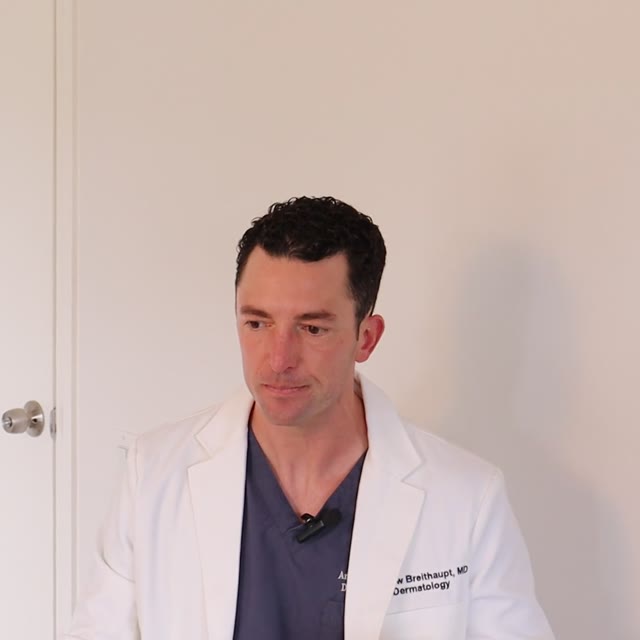
Dr. Breithaupt answering: Is the classic blue bottle of aloe gel actually any good? Watch · Is the classic blue bottle of aloe gel…
Question 02

Is the classic blue bottle of aloe gel actually any good?

It makes sense why it's been the go-to. If you think of aloe vera, it's kind of the original gel — you crack open the leaf and the gel is right there inside.

Read Dr. B’s full answer

It makes sense why it's been the go-to. If you think of aloe vera, it's kind of the original gel — you crack open the leaf and the gel is right there inside. We've been using it for hundreds, if not thousands, of years, before we knew how to manufacture these things. Aloe vera is also naturally an anti-inflammatory and a light antioxidant, so it accomplishes a lot of what we'd like to accomplish.

But a commercially available aloe gel is mostly water, and sometimes there's a little alcohol in it. It's not really a sustained delivery mechanism. You put the gel on and get a temporary soothing effect, but that water evaporates very quickly — and any alcohol in the product only hastens the evaporation. That's why it feels okay for 10 or 15 minutes, and then you're left with that filmy feeling: the water's gone and you're back to reapplying. That's why it comes in a big 32-ounce bottle — because it's not sustained.

A product like a hydrogel is much more of a sustained moisture barrier. The water is held inside, and it's a slow, trapped delivery mechanism that doesn't have to be reapplied every 10 or 15 minutes like an aloe gel.

Dr. Breithaupt answering: What exactly is a hydrogel, and how does it work? Watch · What exactly is a hydrogel, and how do…
Question 03

What exactly is a hydrogel, and how does it work?

A hydrogel is a specific type of wound dressing. It's made of a polymerized material — think of a simple molecule repeated over and over into a large, three-dimensional lattice.

Read Dr. B’s full answer

A hydrogel is a specific type of wound dressing. It's made of a polymerized material — think of a simple molecule repeated over and over into a large, three-dimensional lattice. That lattice is hydrophilic, which means water-loving: when it's exposed to water, it absorbs it and holds onto it. Think of a sponge — you dip it in the bucket, pull it out, and it's completely saturated. A hydrogel is the same.

It's used as a wound dressing to provide sustained hydration. You put it on the area, it's occlusive, and the water can transfer back and forth between the skin and the dressing. So it's a great way to deliver intense hydration with very few other ingredients. Ointments and creams are more oil-based — they trap hydration but they don't deliver it. A hydrogel is a great way to get a lot of water to an area without a lot of extra stuff.

Dr. Breithaupt answering: Is a hydrogel really better than regular gels and creams? Watch · Is a hydrogel really better than regul…
Question 04

Is a hydrogel really better than regular gels and creams?

Yeah, absolutely. Let's break down the classic methods.

Read Dr. B’s full answer

Yeah, absolutely. Let's break down the classic methods. We talked about aloe vera gel — a lot of water content, but no real way to keep that water there. It's a quick delivery, and then you have to reapply it.

Creams, lotions, and ointments have varying degrees of oil content, increasing as you go from lotion to cream to ointment. Those are much more occlusive — they work less by delivering water and more by trapping it. With eczema patients, for example, we often have them soak in water before applying an ointment, so they trap that water in. But sometimes those can be a little too occlusive and clog pores.

On a burn, you want a two-way street — you want the water to move in and out, not just one way like it would with an ointment. If you apply something too occlusive after a burn, you can get clogged pores and a lot of other problems.

Dr. Breithaupt answering: Hydrogels come from hospitals — does that work on a sunburn? Watch · Hydrogels come from hospitals — does t…
Question 05

Hydrogels come from hospitals — does that work on a sunburn?

This is my first introduction to seeing that crossover, and I think it's a great idea. We've talked about TermaBurn and the history of a more classic medical indication for a hydrogel — like a radiation burn.

Read Dr. B’s full answer

This is my first introduction to seeing that crossover, and I think it's a great idea. We've talked about TermaBurn and the history of a more classic medical indication for a hydrogel — like a radiation burn. There are a lot of analogies between a radiation burn and a sunburn; they're really just burns from different parts of the electromagnetic spectrum. So translating it from the medical setting to a consumer setting for sunburn is a great idea. I've never seen it used in practice for sunburns, but it makes absolute sense.

And the fact that it comes from a clinical history — it's gone through clinical testing and manufacturing best practices, all the things you'd want to see before applying or recommending it to a patient, especially on damaged skin.

You want to apply something that doesn't have a whole lot of extra. You don't need the risk of preservatives or fragrances that could sensitize the skin — but you do want to deliver a lot of water. A hydrogel is a great way to accomplish that. It's a simple, safe, effective way to deliver sustained hydration to injured skin.

Dr. Breithaupt answering: Soothing a burn vs. actually healing it — is there a difference? Watch · Soothing a burn vs. actually healing i…
Question 06

Soothing a burn vs. actually healing it — is there a difference?

Soothing a sunburn and accelerating its recovery go hand in hand. What are you soothing?

Read Dr. B’s full answer

Soothing a sunburn and accelerating its recovery go hand in hand. What are you soothing? You want to cool it down — you feel hot when you have a sunburn — and you want to decrease the pain and the itch. We do that by cooling the skin and decreasing inflammation, because the pain and the itch are all mediated by inflammation. By decreasing the heat, you feel better, and you also slow down the heat-related cell death — and more cell death accelerates the whole process.

By decreasing the inflammation, you minimize the pain and itch, but you also decrease the inflammatory cascade that's furthering the cell death. So not only are you feeling better symptomatically — on a cellular level, you're actually slowing down the damage.

You're not reversing the damage — I want to be careful there. If DNA damage is done, it's done; the only thing that can really reverse that is your body's own DNA repair mechanisms. But you can slow it down. And that's the best thing you can do: intervene early and slow down that damage.

Dr. Breithaupt answering: How fast can the right product cool a sunburn? Watch · How fast can the right product cool a …
Question 07

How fast can the right product cool a sunburn?

Interviewer: “We had an independent lab measure skin temperature, and 60 seconds after applying TermaBurn it came down by about 10 degrees — and we've replicated that on the beach many times. Would you say that's a desirable intervention?”

100%. It's great to see it objectively like that, but having used the product, you feel it immediately — subjectively, you feel it right away.

Read Dr. B’s full answer

100%. It's great to see it objectively like that, but having used the product, you feel it immediately — subjectively, you feel it right away. And then, interestingly, after you take the product off, you'd expect that greasy, gooey feeling you get with an ointment. You absolutely don't — it's all water. Moments after the product comes off, there's no weird post-application residue or goo.

Dr. Breithaupt answering: The one piece of sunburn advice most people don't know. Watch · The one piece of sunburn advice most p…
Question 08

The one piece of sunburn advice most people don't know.

Intervening actually makes a difference — quick, effective intervention can make a real difference. Don't get the damage in the first place, because you can't fix that DNA.

Read Dr. B’s full answer

Intervening actually makes a difference — quick, effective intervention can make a real difference. Don't get the damage in the first place, because you can't fix that DNA. But have a good product on hand. The way TermaBurn is packaged, it's really easy to keep in a beach bag or in the cabinet at the beach house.

Recognize the burn happened — it happens to me, it happens to everybody. Get something on it quickly. It's effective, it's easy, it's low effort, and it actually makes a difference in terms of peeling and recovery — overall, in how quickly you can recover from that burn.

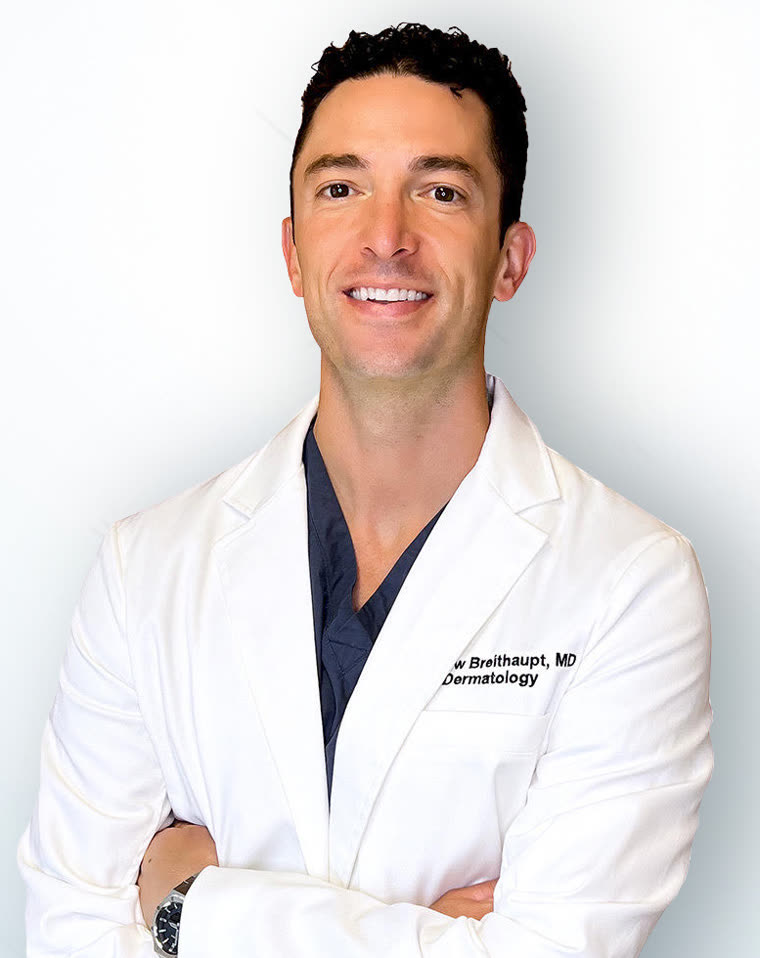
Dr. Andrew Breithaupt, MD, dermatologist

About the Dermatologist

Andrew Breithaupt, MD

Double Board-Certified, Fellowship-Trained Dermatologic Surgeon · TermaBurn Chief Medical Advisor

TermaBurn is honored to have Dr. Andrew Breithaupt join the team as our Chief Medical Advisor. Dr. B is a double board-certified, fellowship-trained dermatologic surgeon who treats sun-damaged and injured skin every day. He has performed over 15,000 surgical procedures, specializing in Mohs micrographic surgery and intricate reconstructions.

Dr. Breithaupt earned his medical degree from the University of California, San Diego, and completed his dermatology residency at UCLA. He was then selected for a highly competitive UCLA fellowship — offered to just one physician each year — in Mohs surgery, reconstructive plastic surgery, and cosmetic dermatology. He serves as an associate clinical professor of dermatology at the UCLA David Geffen School of Medicine.

  • 🎓 Double Board-Certified
  • 🔬 Mohs Micrographic Surgery
  • 🦷 15,000+ Procedures
  • 🏫 UCLA David Geffen Faculty

Ready when your skin is

Try the hydrogel Dr. B is talking about.

TermaBurn is a wearable aloe hydrogel that cools on contact and keeps working — no runny bottle required.

Shop TermaBurn →

This Q&A is for general educational purposes and reflects Dr. Breithaupt’s professional opinions; it is not medical advice and is not a substitute for care from your own physician. TermaBurn is a cooling/soothing hydrogel and is not intended to diagnose, treat, cure, or prevent any disease. Individual results vary. Sunburn is skin damage — the best protection is prevention (shade, clothing, and sunscreen).